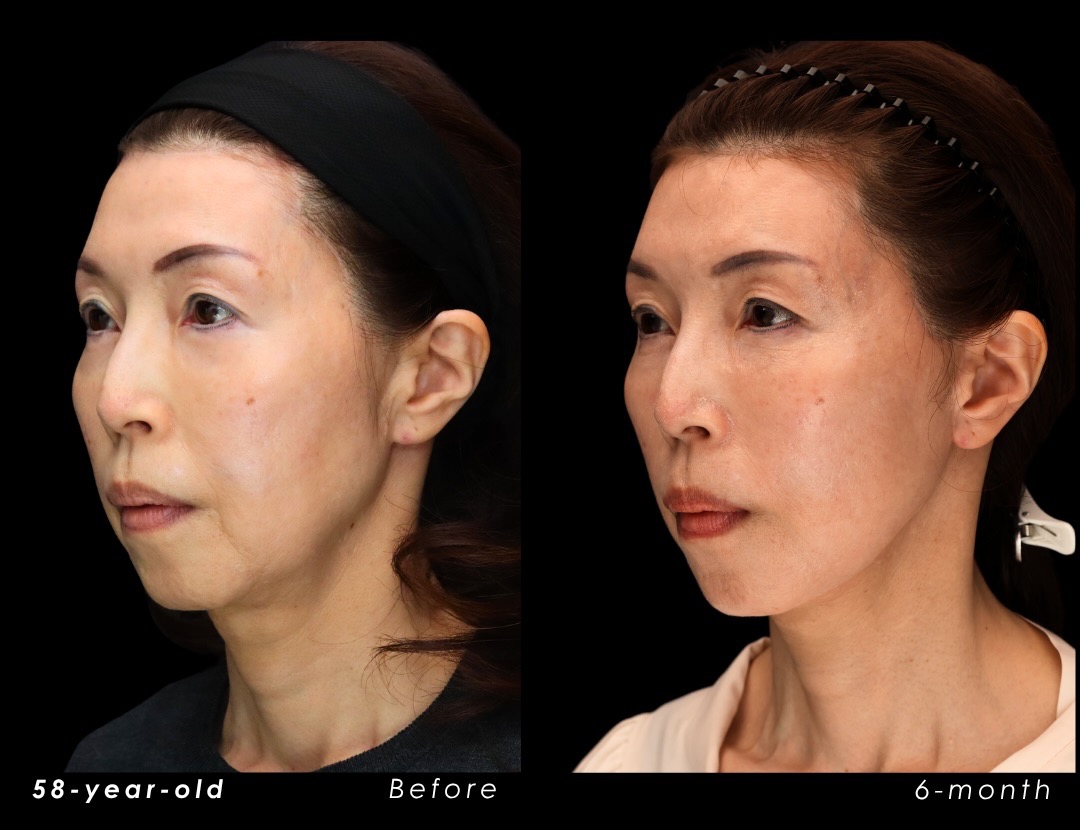
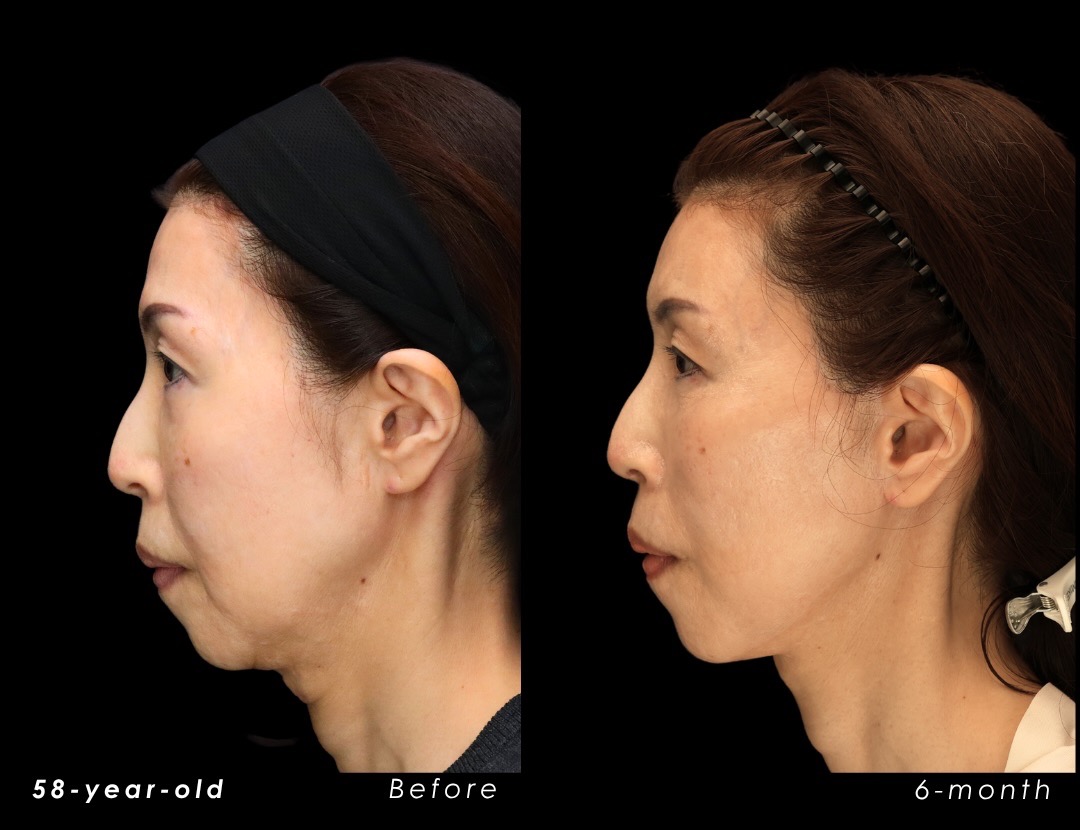
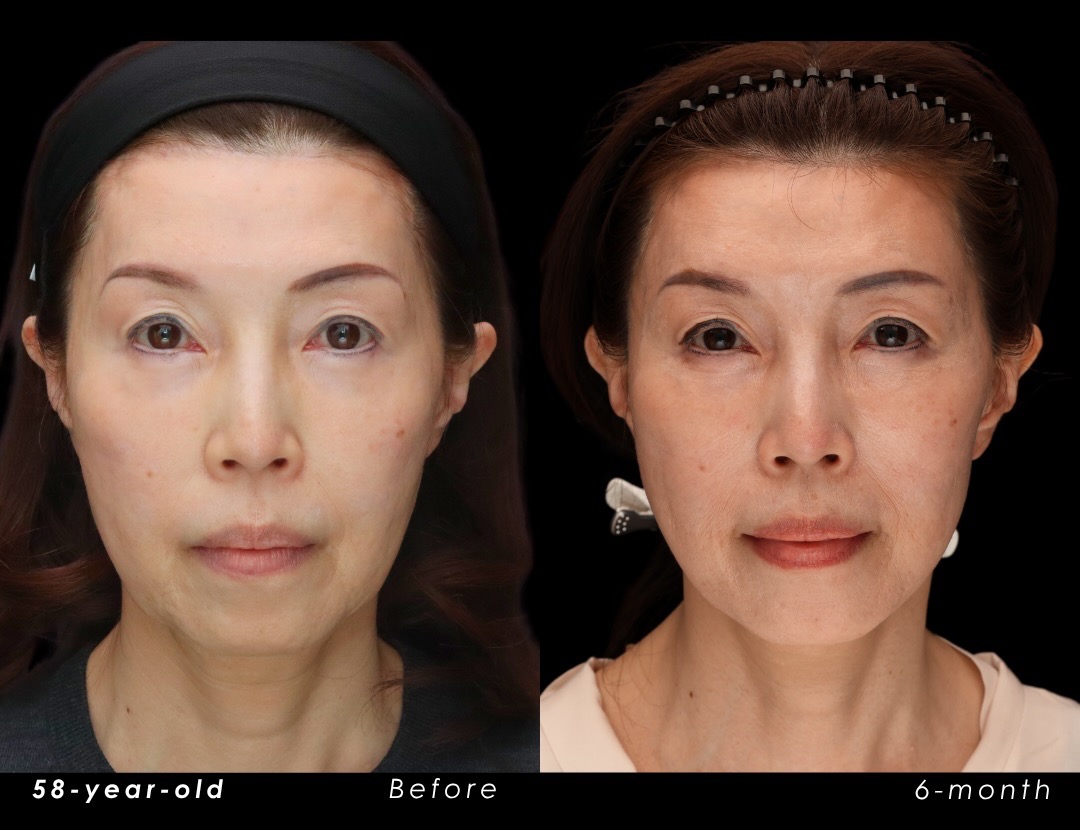
This patient underwent treatment for tissue descent extending from the face into the neck. Rather than applying strong tension to the skin surface, the deeper layers were repositioned. The oblique, profile and frontal photographs show the changes six months after surgery.
Case summary
- Age: 58 years
- Primary concerns: facial descent, loss of jawline definition and neck laxity
- Procedure: Face & Side Neck Lift
- Treatment course: one operation followed by several postoperative examinations and follow-up visits
- Photographic time points: before surgery / six months after surgery
Priorities in this case
The midface, lower face, jawline and neck were evaluated as one continuous structure rather than assessing the face and neck independently.
Age-related change affects not only the skin but also the supporting tissues beneath it, including fat and fascia. The priority was therefore to release descended deeper tissues appropriately and return them to a natural position rather than pulling strongly on the surface.
Procedure selected and its purpose
Deep-plane Face & Side Neck Lift
The deeper facial plane is dissected and released so that descended tissues can be repositioned in an anatomically appropriate direction. The procedure aims to elevate the midface and lower face while treating the lateral neck without placing excessive tension on the skin.
This procedure is not appropriate for every patient. The required extent of treatment is determined after assessing the location and degree of laxity, skeletal anatomy, skin condition and previous treatment history.
Changes visible at six months
In the oblique view, the position of the midface and lower-face tissues has changed and the jawline is more readily defined than before surgery. In the profile view, the transition from the chin to the neck is clearer and the neck contour appears smoother. The frontal view shows the change in contour from the midface to the lower face.
At six months, swelling has largely settled and the contour is generally easier to assess. Scars, tissue firmness and sensation may nevertheless continue to change. Results and recovery vary between patients, and the same degree of change cannot be guaranteed.
Treatment course and fees
- Usual treatment period and number of visits: One operation, followed by several postoperative examinations and follow-up visits. The exact number varies between patients and may also differ according to the conditions of the monitor discount.
- Total fee for the procedures shown (tax included): ¥1,705,000 (including anesthesia; full-face monitor discount applied)
- Breakdown: Face & Side Neck Lift (full-face monitor) ¥1,540,000 + general anesthesia with mechanical ventilation ¥165,000
*The fees shown above apply at Cinderella & Da Vinci Clinic. International patients are accepted through Your Face Clinic. Please refer to the price list for international patients (PDF) for the applicable fees.
Principal risks, adverse effects and complications
Possible risks include bleeding, hematoma, infection, visible scarring, delayed wound healing, hair loss around the incision, prolonged swelling or bruising, pain, tightness, altered sensation, nerve injury including facial nerve dysfunction, contour irregularity, asymmetry, recurrence of laxity and a result that differs from the patient’s expectations.
Author and medical review
- Written and medically reviewed by: Shoichi Sasaki, M.D.
- Created: July 26, 2026
For detailed information about treatment, fees, principal risks and potential adverse effects, please refer to the explanation provided during your consultation.