A facelift result is not determined simply by how strongly the tissues are pulled. What matters is whether the lifting force reaches the cheek, mouth area and other regions that need improvement. The retaining ligaments of the face—and the continuity of the tissues around them—are central to this concept.
Retaining ligaments are fixed support points
The face contains retaining ligaments that extend from bone or deeper structures toward the skin. They help hold the skin and the superficial musculoaponeurotic system (SMAS) in position, but during facelift surgery they can also act as fixed points that interrupt the transmission of lifting force.
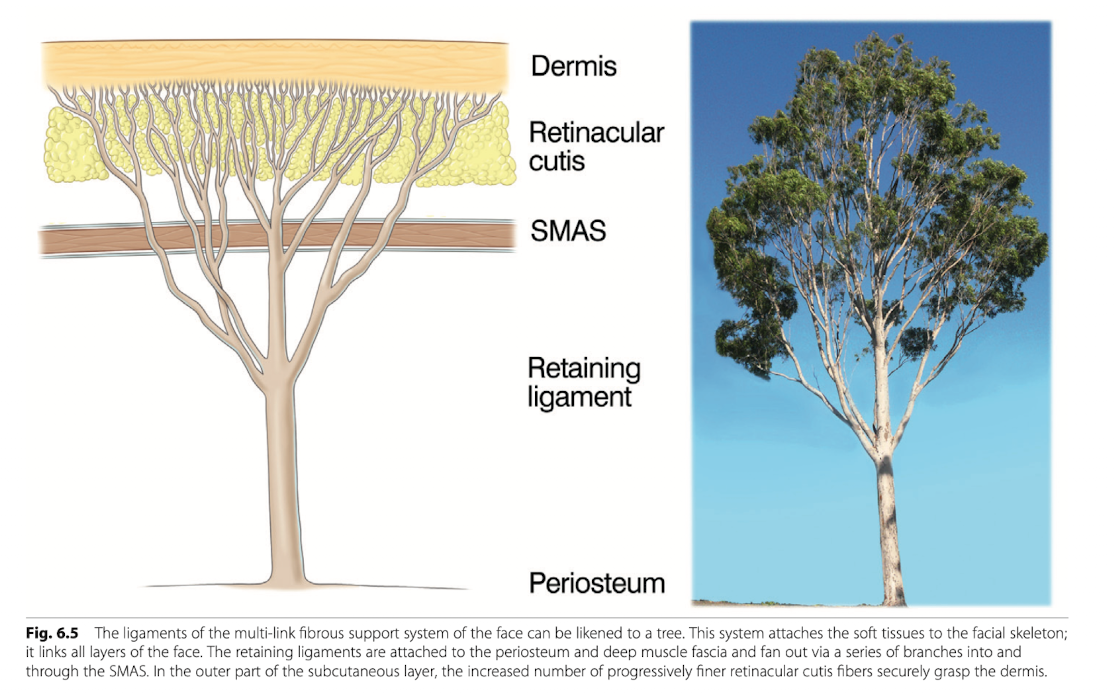
In this illustration, a thick trunk attached to the periosteum or deep fascia passes through the SMAS and branches into progressively finer fibers called the retinacular cutis before reaching the dermis. A retaining ligament is therefore not simply a single cord. It is better understood as a multi-level fibrous support system connecting the deep face to the skin.
During a facelift, the skin and SMAS are elevated from the area around the ear. If a fixed structure remains between the point of traction and the area to be improved, the force may not reach the central face effectively.
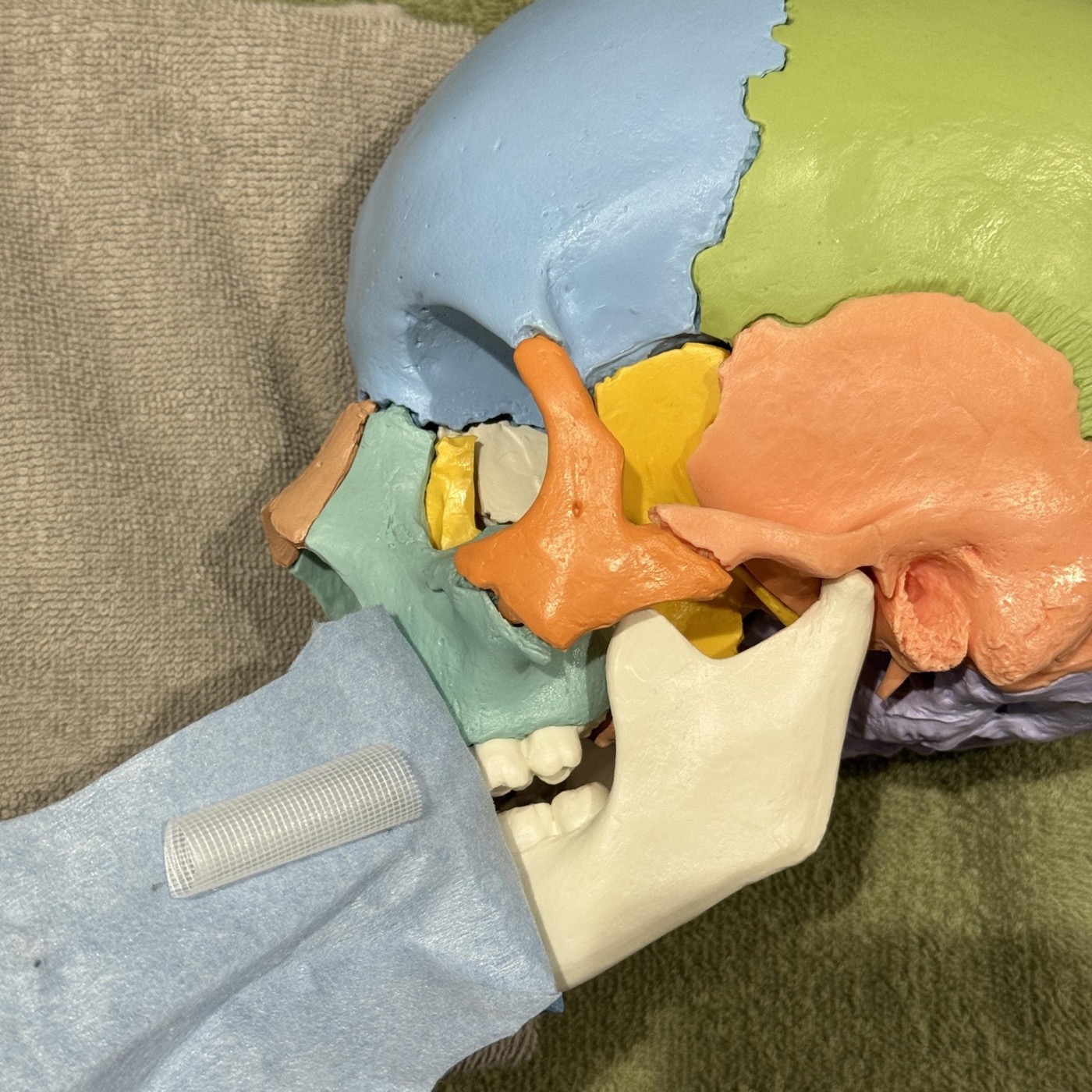
A model of force being blocked
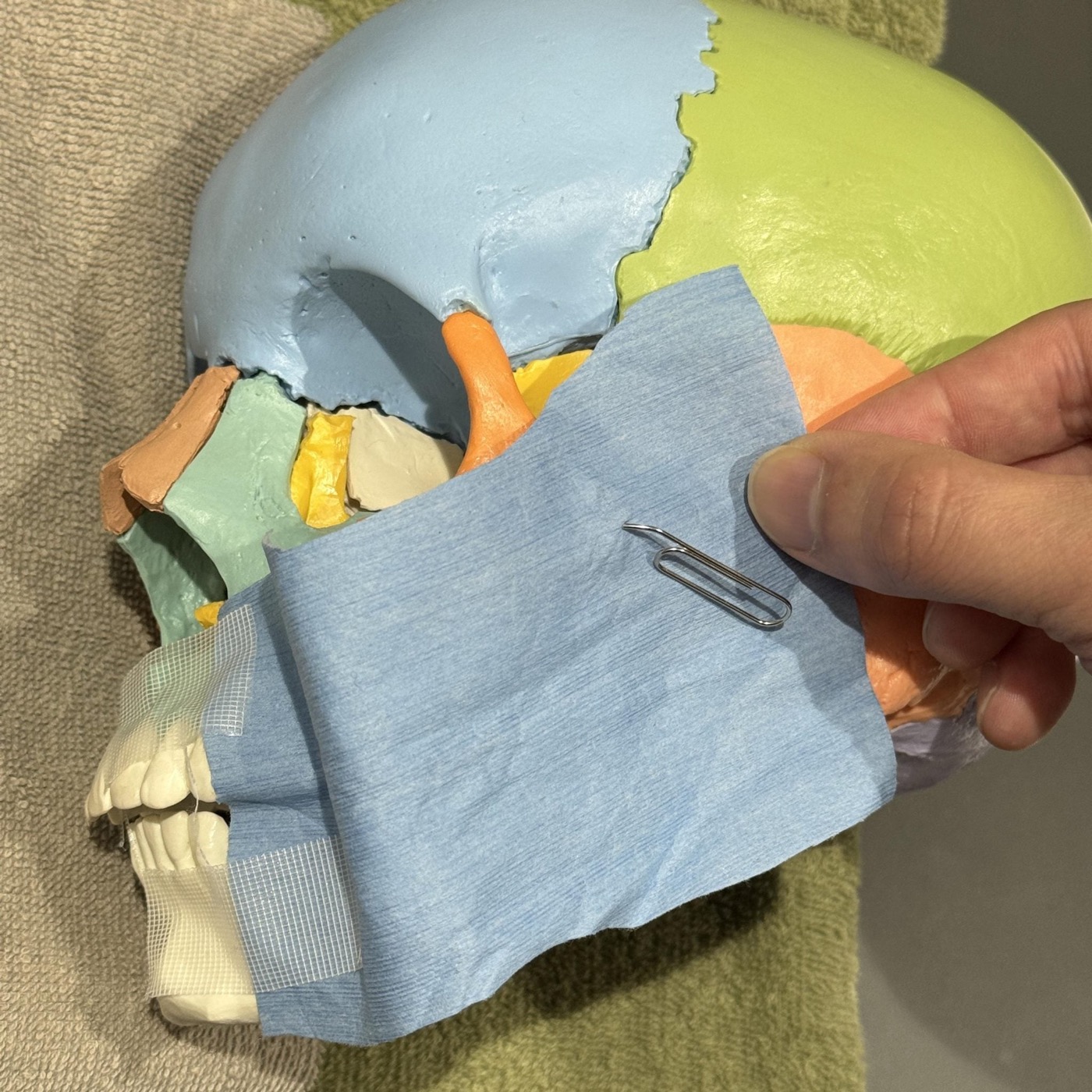
In the following model, the blue fabric represents the skin and SMAS, while the clip represents a retaining ligament. Pulling the fabric from the side does not effectively move the front portion while the clip remains in place.
Appropriate release allows force to travel forward
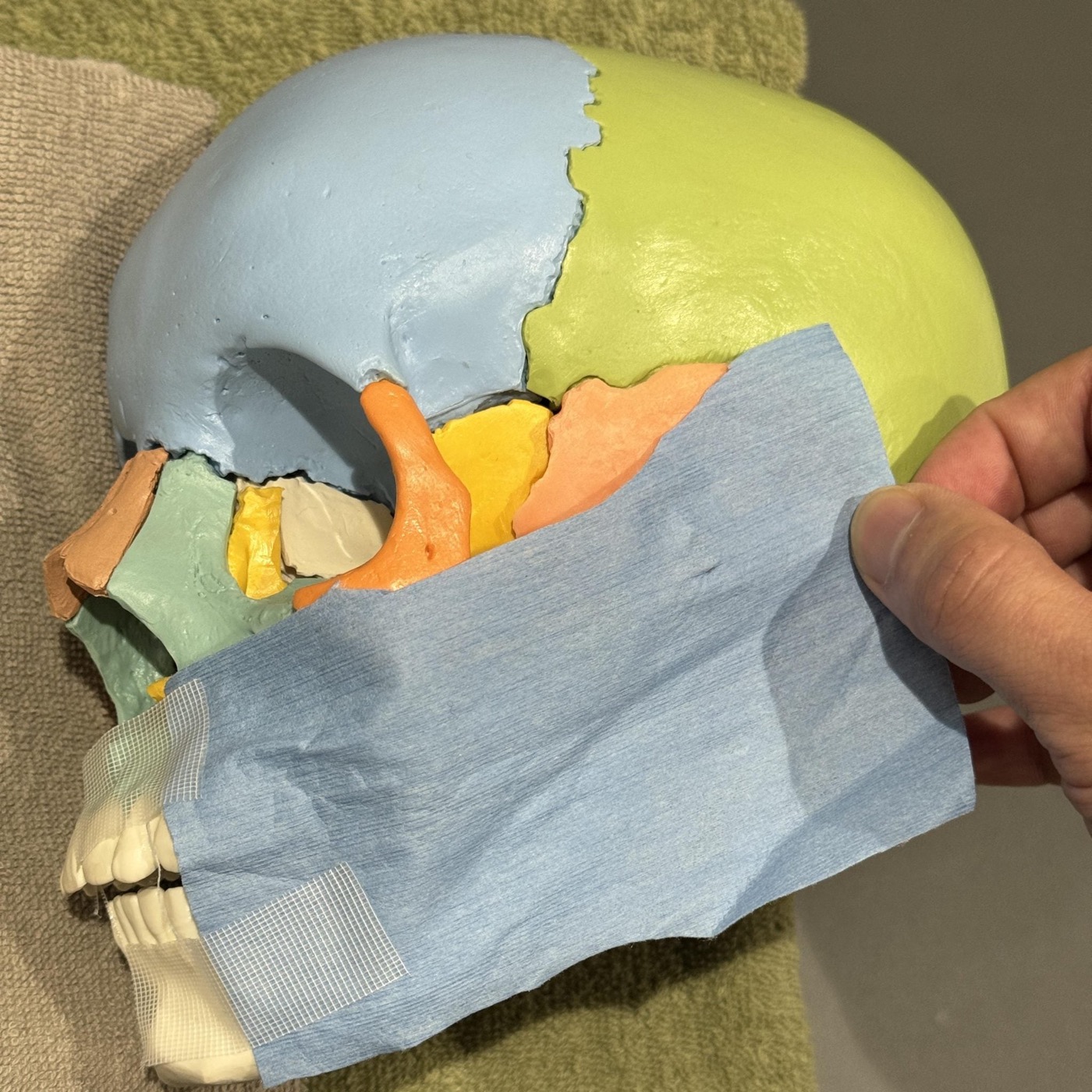
When the clip is removed, the lifting force can travel farther toward the front of the model. In the same way, appropriate management of the retaining structures is an important step in delivering a facelift’s effect to the intended region.
In the actual face, however, the structures that must be considered are not limited to clearly defined ligaments.
Treating broad tissue continuity—not ligaments alone
Between the skin, SMAS and deeper tissues, there are strong ligamentous fixed points as well as broader areas where tissue planes remain connected. In the model, these connections are represented by a black mark and tape on the back of the fabric.
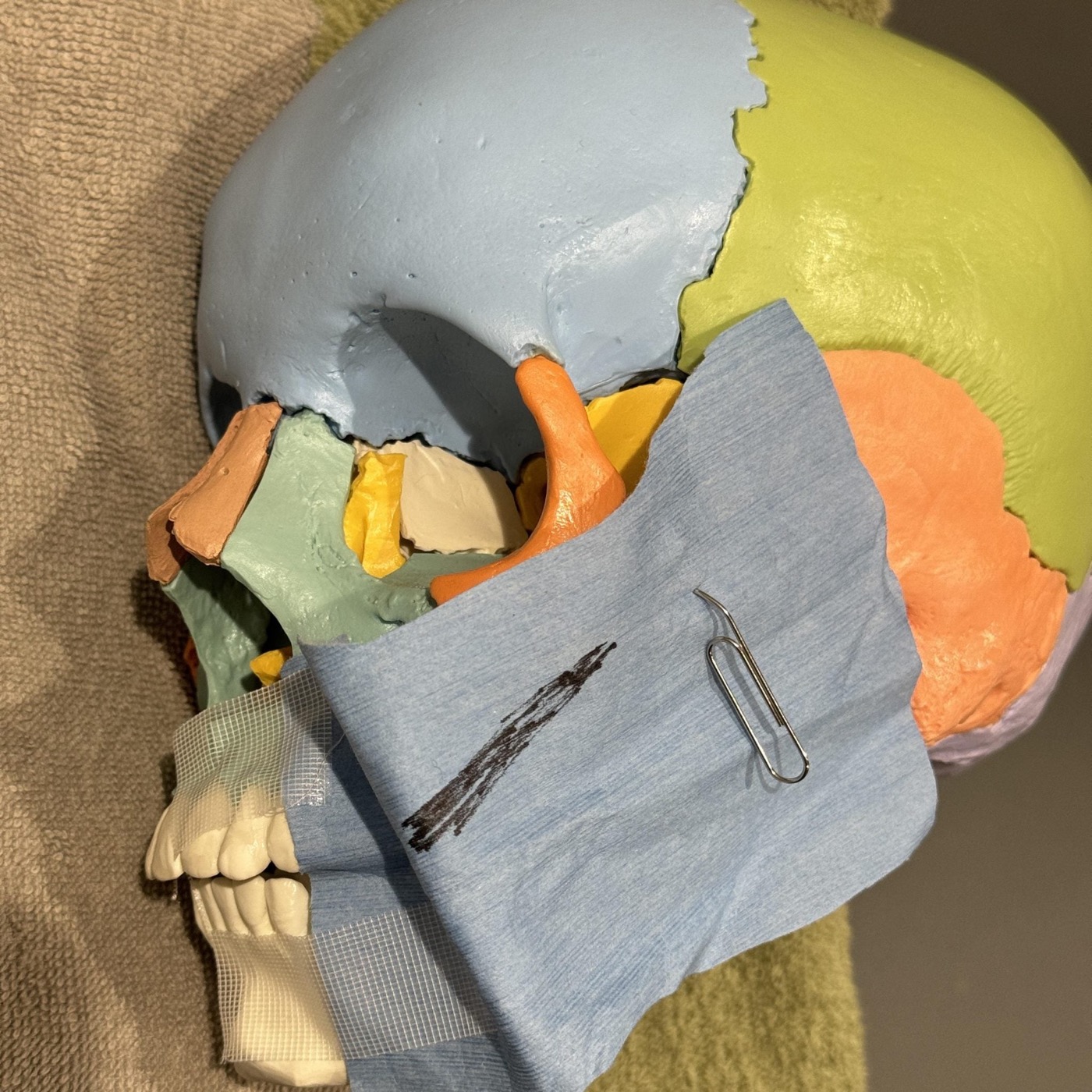
It may help to think of these connections as a glued surface. Even after a discrete ligament has been released, retained connections across a wider area can continue to limit movement.
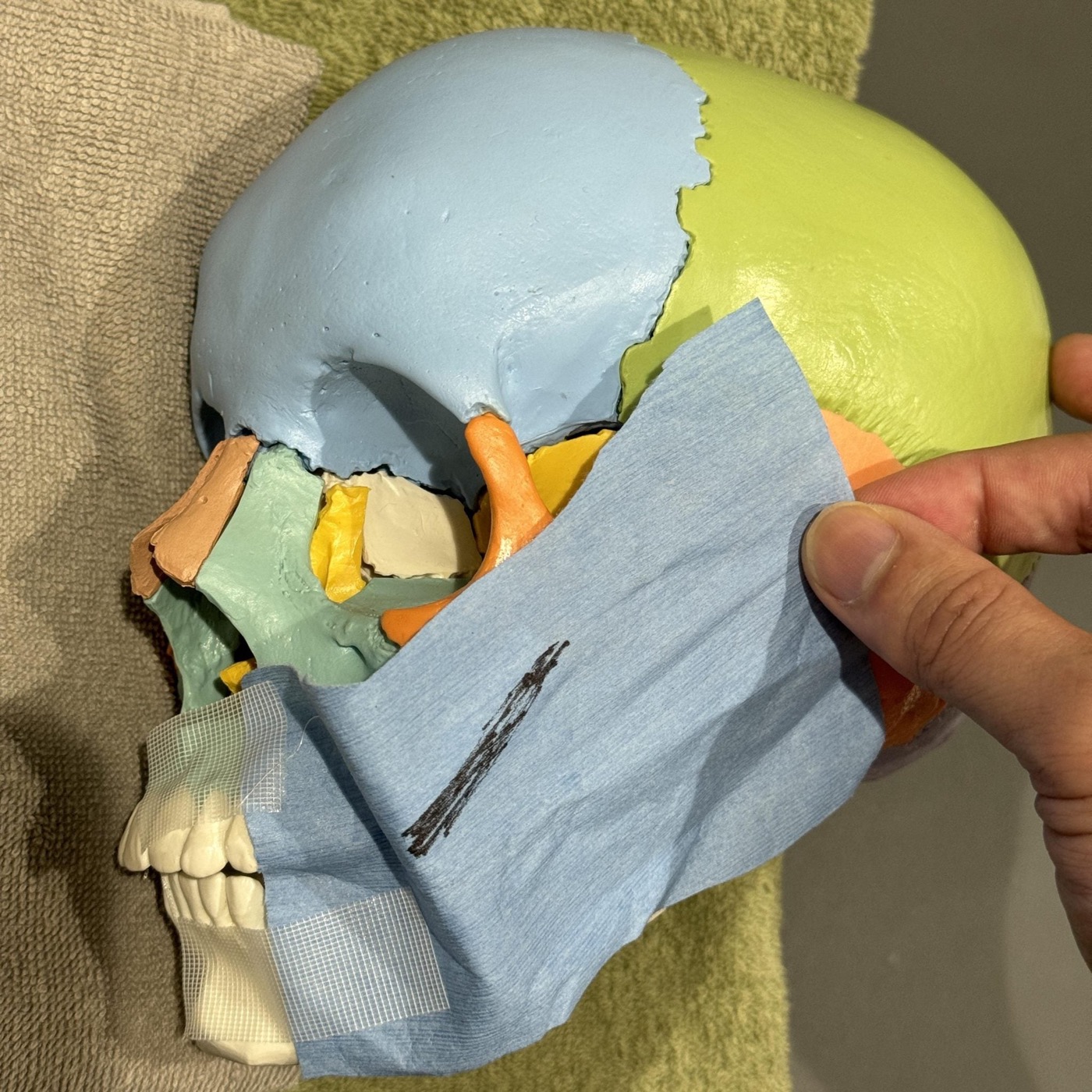
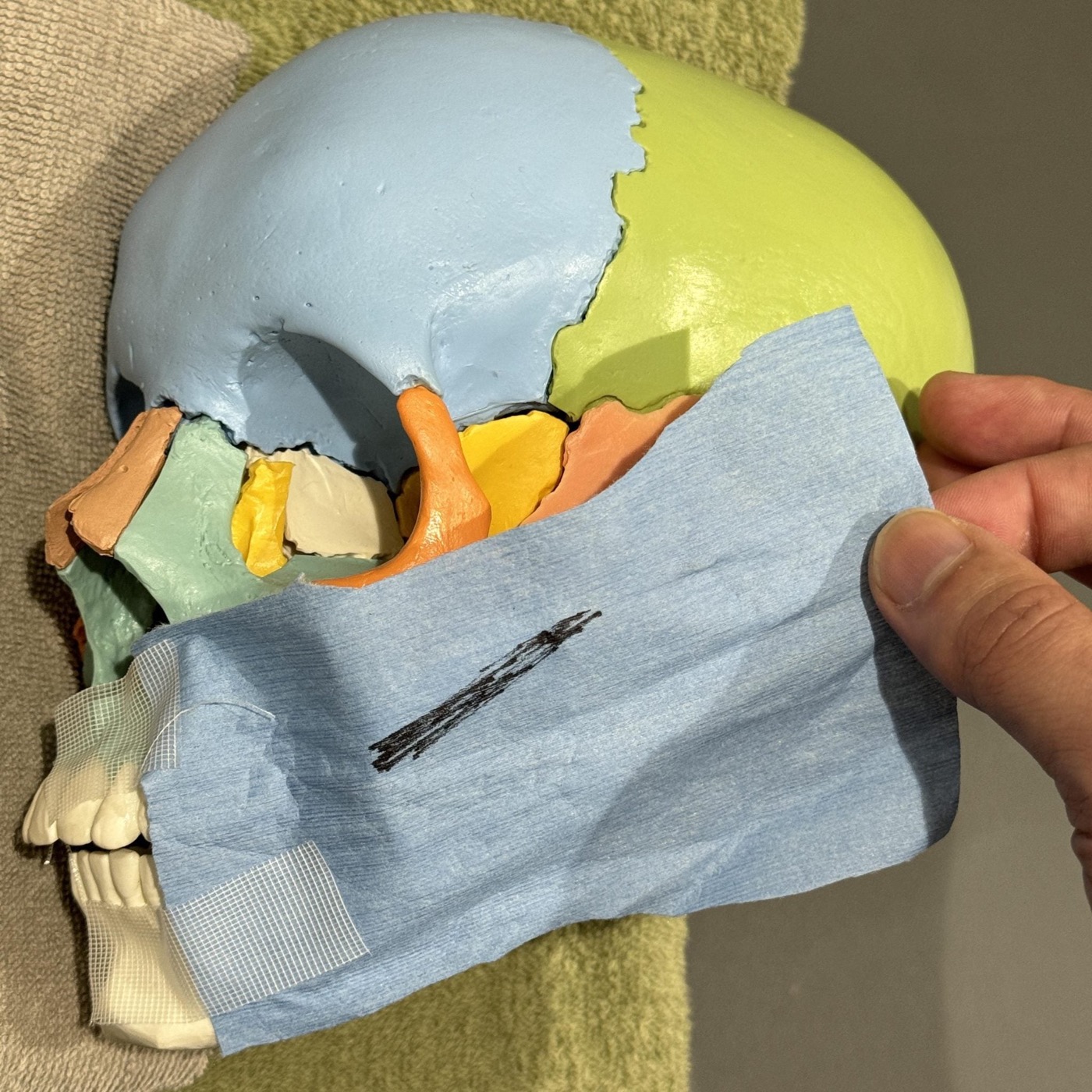
What matters in an Extended Deep Plane approach
An Extended Deep Plane Facelift addresses the required retaining structures and carefully releases the surrounding tissue continuity over the necessary area. The aim is not to pull the SMAS with excessive force, but to allow the tissues to move within the anatomical plane in which they can be repositioned.
Facial anatomy and tissue connections vary between individuals. The extent of release must therefore be determined from the examination and the operative findings rather than applied uniformly.
Deep Plane and ligament release
It is often said that “Deep Plane surgery releases the ligaments,” but this is not a precise distinction. Retaining ligaments extend from bone toward the skin and continue into layers superficial to the SMAS. Some ligamentous fibers can therefore be divided during techniques performed above the SMAS as well.
The phrase “ligament release” does not describe the full operation. Its meaning changes substantially according to the depth, the structures treated and the extent of release. These details are necessary when comparing techniques.
Summary
Three points to remember
- Retaining ligaments support the face but can also interrupt the transmission of lifting force.
- Appropriate release can help that force reach the cheek and perioral region.
- The broader tissue continuity around the ligaments must also be evaluated.
A facelift cannot be understood by its name alone. The operative design depends on the layer treated, the extent of release and the direction in which the tissues are moved. Careful planning and execution of each step support a natural result.