The name “Deep Plane Facelift” alone does not tell us which layer was entered or how far the dissection extended. Because the term is used differently across publications and surgeons, it is important to understand the actual surgical steps rather than relying on the name.
Deep Plane has several definitions
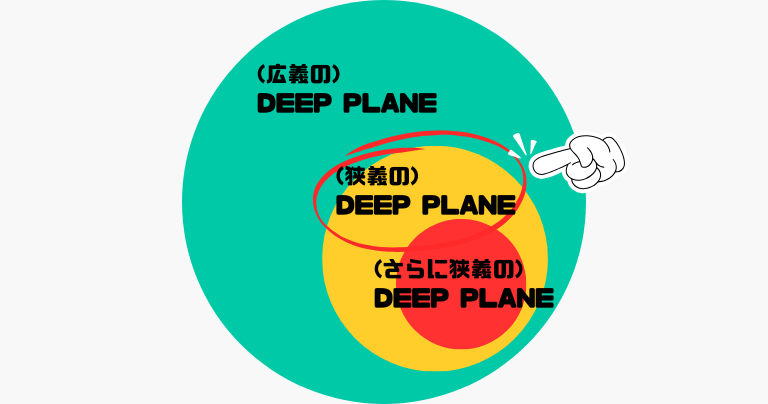
In its broadest use, Deep Plane may include almost any facelift that involves some form of SMAS manipulation. In a narrower and more common use, it refers to entering beneath the SMAS and moving the skin and SMAS together as a composite unit.
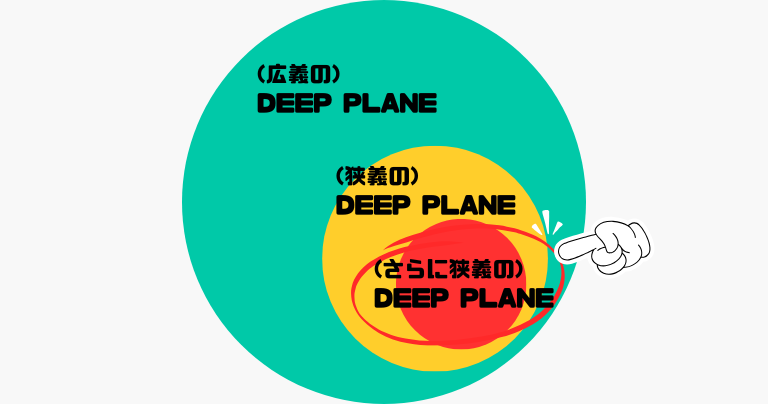
A still more specific distinction considers whether the muscles of facial expression in the midface remain with the SMAS-side flap.
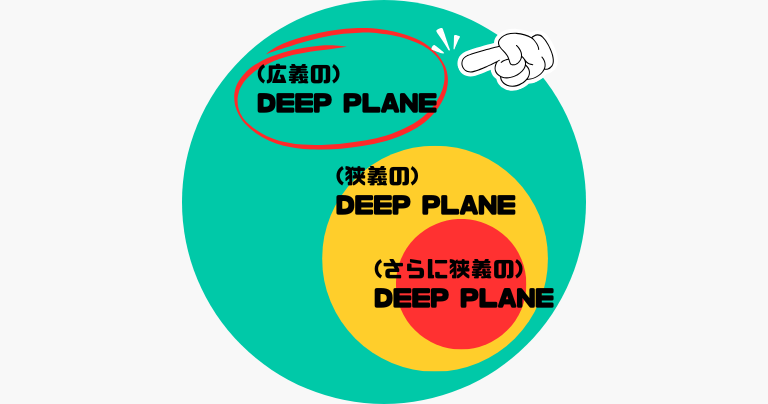
1. Broad definition
In the broadest sense, a facelift may be called Deep Plane when the SMAS is incised, excised, folded, advanced or otherwise manipulated.
This definition can include procedures without extensive sub-SMAS dissection. The label alone therefore does not reveal how completely the retaining ligaments were released or how much change can be expected in the midface.
2. Narrow definition
In the more familiar definition, dissection begins in the subcutaneous plane laterally and then enters beneath the SMAS at a defined point. The retaining structures required for the planned movement are released.
Moving the skin and SMAS together can make it easier to design changes that include the midface while avoiding excessive tension on the skin alone.
3. More specific definition
Within the midface, the dissection can also be classified according to whether the muscles of facial expression are included with the SMAS-side tissues. Academically, this approach is described as a composite facelift.
Neither option is universally superior. The appropriate layer depends on SMAS thickness, fat distribution, previous surgery and any procedures performed at the same time.
Four questions to ask during consultation
- Where does the dissection enter beneath the SMAS, and how far does it extend?
- Which retaining ligaments and surrounding tissues are released?
- Is the main goal improvement of the cheek, jawline, neck or a combination?
- Why is the proposed technique suitable for the patient’s individual pattern of laxity?
Summary
Deep Plane Facelift is not a single, universally standardized maneuver. The term is used across a spectrum of operations, and the name alone cannot determine quality or expected effect.
The essential question is whether the layer, extent and direction of movement have been designed for the patient’s anatomy and goals.